Granulare Synthesis
Fundamentals of the technique of granular synthesis:
Overview over the granular synthesis technique
short introduction by Gerhard Behles.
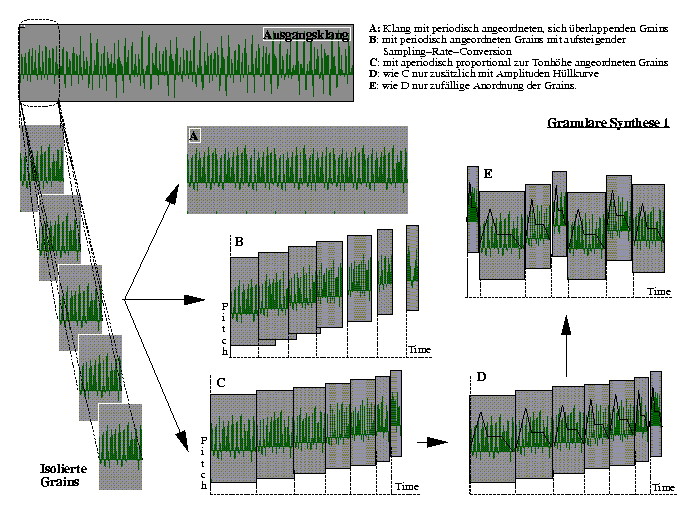
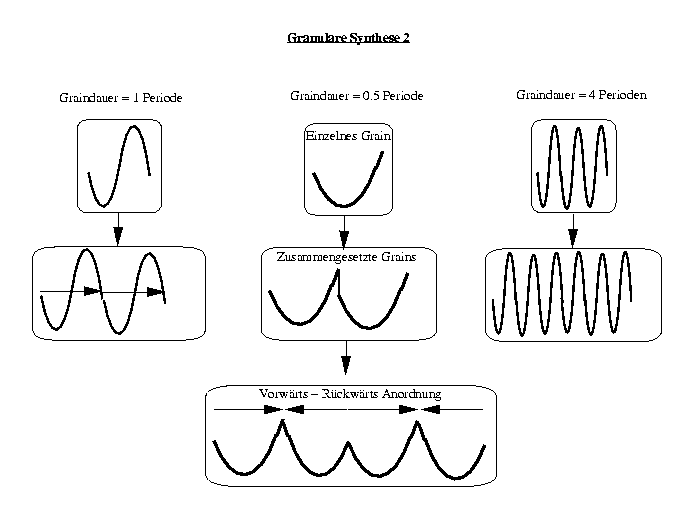
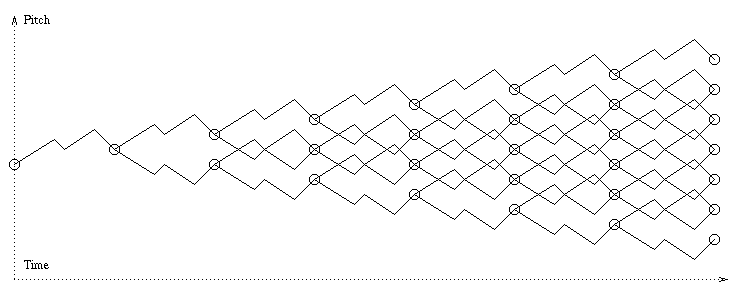
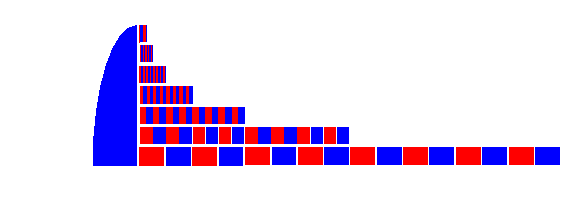
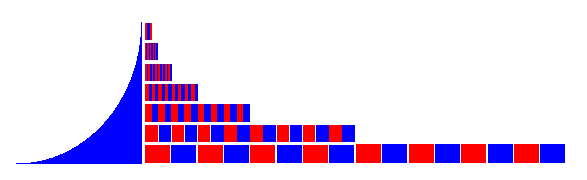
the result of granular synthesis is a stream of so called grains. a grain is a piece of sound with a duration between 2 milliseconds and several hundreds of milliseconds (5 ms is a typical mean value); no matter what the under- lying sound material is, the grain has an envelope shape with some degree of fade-in- and fade-out time. these attack- and release portions of the envelope make sure that no truncation noises (clicks) will be heard, regardless of transients in the material. the choice of material to use for granular synthesis is basically independent of the model: sine waves, fm-sound and concrete sound (sound samples) or whatever. in order to achieve continuous sound output, grains are fired repeatedly. truax' model organizes grains in VOICES. one voice plays a grain, is silent for a while, plays a grain again, is silent again etc. this process can be controlled using two parameters: the grains DURATION and the DISTANCE between grains. the sum of the values for duration and distance is the PERIOD of a grain cycle. since typical values for distance and period lie in the milli- second range, a sensation of pitch will arise from the grain cycle, overlaying and interfering with the underlying material's pitch (if the material is pitched, that is). In fact, this process can be regarded as a form of AMPLITUDE MODULATION, and the sound that is obtained with short periods is often being associated with ring modulation. a source of statistical deviation is being introduced to enrich the quality of the synthesized sound: each time a grain is fired, a couple of random operations are invoked in order to determine this grains duration, its distance from the following grains, and maybe other parameters that influence what the grain sounds like; for example the PITCH or TRANSPOSITON of the underlying material. In fact, each of the relevant parameters, i.e. duration, distance, pitch, etc. is accessed by a pair of values: one FIX value and one RANGE value, where the result of a random operation is the "fix" value plus a random number between zero and the "range" value. so with a duration fix value of 10 ms and a duration range value of 5 ms you would be getting grains of a duration between 10 and 15 ms, or 12.5 ms average; with a steady, unbiased value for distance of, say, 20 ms this would result in a period varying between 30 and 35 ms, or in a grain FREQUENCY fluctuating between 33.3 Hz and 28.5 Hz. grain frequency in one voice is equivalent to the so called GRAINS PER SECOND value. at high grain frequencies, the effect of increasing duration and distance range values is often associated with adding NOISE. grain density is enriched by increasing the number of voices. each voice is doing the same thing (the process that has been described above) and is being controlled by the same set of parameters. so there is only one knob for grain duration fix no matter how many voices are sounding. in fact, as long as all range values remain zero, all voices will sound equal and in phase, so they will just sound like one voice at a higher amplitude. as the range value for, say, duration is increased, the onset of grains will be smeared among the voices, and the voices will be completely out of sync at some point. this is because new random deviations are being calculated with each grain's onset, and the grains in the different voices will be drifting apart as a consequence.
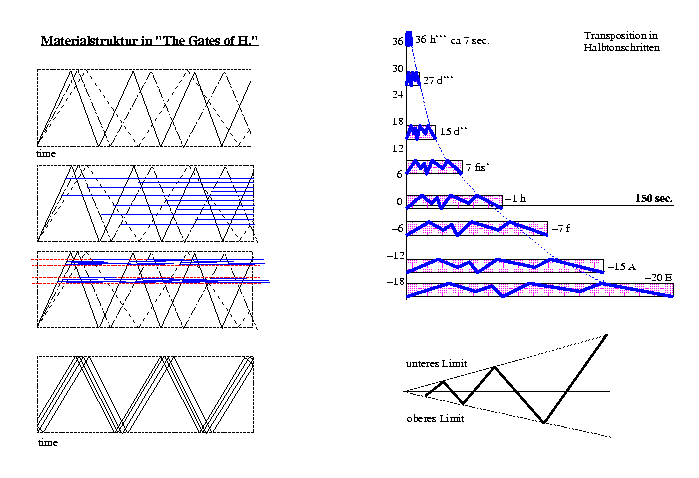
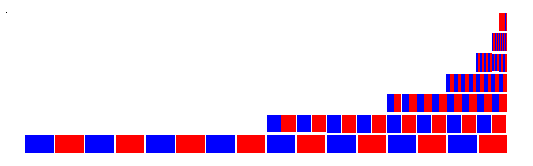
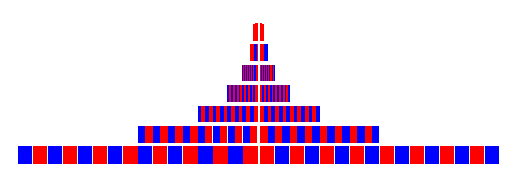
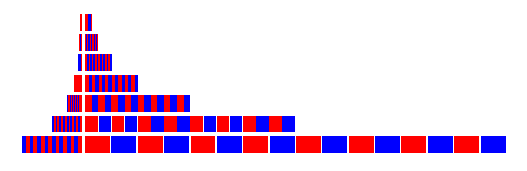
Modifications of the granular technique
Physical Modeling
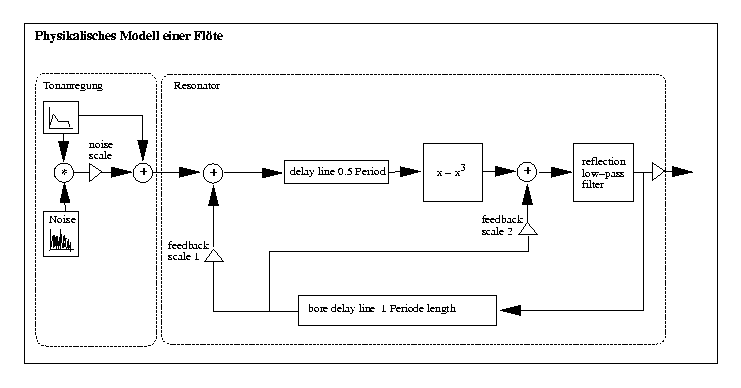
Genesis an Example of a modular physical modeling software.
Genesis is a software package driven by the physical modeling language
"Cordis Anima" (Claude Cadoz, Anni Luciani, Jean Loup Florens. See Proceedings
ICMC 1995 Banff, Computer Music Journal 17.1)
Cordis Anima is a generalized approach to physical modeling. It uses
generalized particle physics paradigms based on the physical interaction
between punctual masses. These masses are linked to each other and perform
linear elastic and viscous interactions combined with finite state automata
processes allowing the description of any kind of non linear interaction.
One can build interaction like articulated objects, collisions, dry friction,
adherence, sticking...
Some software functions and a GUI is added to create a software which
feeds the specific needs of people working in music and acoustic. For example,
the movement of some masses can be monitored and written to a floating
point sound file. The sound file then appears in a sound editor where it
can be listened and modified.
Besides these tools for handling audio data an animation procedure
is available. The Animation shows the action of the current patch in a
very much slower speed then the actual structure vibrates. This is done
to make it a tool for understanding the interaction between the vibrating
structures.
The theory behind cordis anima
The approach of the Cordis anima using particle
physics for creating complex physical models is ruled by the paradigm of
the interaction of punctual masses. This means equivalent to the physical
existence of substances that single molecule like units create the frame
of a physical object. These molecule like units which I refer to as masses
are linked together to create an interaction which represents the flow
of different forms of power between the masses. Power or force is a sum
of different elements according to Newton's laws. These elements are speed,
which in a discrete world is created out of the context between last position
current position and time interval between these positions and weight.
The connection between the punctual masses is installed with links serving
the purpose of transforming the different states of force. Masses perform
a transformation of force into speed i.e. position while links perform
the translation of speed into force.
The displacement of 2 masses creates forces into two directions. The
interaction force of the force between the 2 masses is correlated to the
quality of the connection (viscosity or elasticity). Viscosity would reduce
the force each time the link is being updated. The elasticity can be seen
as the container of the force: when a spring is being stretched it contains
the force injected into the system. As a consequence the 2 masses would
move into opposite directions (one with positive force, one with negative
force) until the energy is drawn out of the system by the amount of friction.
This process would periodically change the value of force, while the two
masses change the direction of movement.
Beside the quality of interaction the quality of the patch describes the resulting sound.
So lets describe how to build a model from scratch. Take an empty patch
field and align the masses in a 2 dimensional field. Now place the masses
on the patch and connect them with REF links. The patch will describe the
flow of energy through the system. Now define the K-value (elasticity)
and the Z-value (viscosity). If you forget to do so the two masses would
have no connection since the Links have the default value of 0. After the
definition of the patch 2 points of monitoring have to be defined. The
movement of these 2 masses are written into a sound file and then played.
Its the same what in every instrument is done: never the complete string
would perform the pressure waves. In a guitar, violin or a piano it is
a specific point which is connected to the resonator. This point leads
the movements of the string to the surface of the resonator which then
brings the air into vibration. A patch must contain a SOL. This is the
reference point for the vibration, it is like the fixed points of a string
or a membrane. Its a point with indefinite weight.
The next aspect would follow the question how to make the model moving.
There are 2 basic ways to inject energy into the system since the system
itself does not contain initial energy:
1. by Displacement of a Mass
2. by an initial force
The task are performed with the Etat initial menu, click on Observation
and then on Etat initial. Change either the position of a mass or the force.
If you got so fare, please don't hesitate to save you patch so that
you do not loose the current work. Do this with the Enregister Sous function
in the Fichier menu. Here you can as well load a patch into Genesis.
Now you want to look if the model does what it should. So trigger the Regarder in the Observation menu. The model should move there. If not, you forgot something. The next step would be to create a sound with it. Do it with the Ecoute button again in the observation menu. If you want to calculate a longer sound, just click on Duree Simulation and tell how long the sound should be. Some more tricks to ease the work to create larger patches I will tell you during the introduction of the course.
The normal link performs a linear mapping between input force and output force f.e. the higher the input force given a specific elasticity or viscosity the higher the output force. When you think of the hammer of a piano you would have a hammer which is not at all connected to the string. But in the moment it would strike the string a rigid connection between both object would appear. To model this behavior, a Conditional Link is introduced into Genesis. The conditional link applies areas of nonlinear behavior between these value fields. For example the following characteristic would cause the link to break if the applied force would increase a specific value. The normal conditional link has a connection between 2 masses in case the position is 0 or negative. With the example of string and hammer this example shows as follows: In case the hammer is in a positive position, i.e. above the string it would have no connection. In case the hammer hits the string at position 0 the position defined with the K and Z value take in effect until they both separate. Of course during the moment of the hammer hits the string a complex interaction occurs. But this is typical for a physical defined interaction and give the attack in the sound the natural character.
input force ..../|
../ .|
/ ...|______output force or position delta
Here a sentence of Claude Cadoz about the conditional link "which allows to move one or more points of the structure out of the balance position, and then to release the link when the tensed force exceeds a predetermined threshold." {this is similar to a plucked string] "The second assumes a minimal modelisation of a striker, made of one or several masses carried along by a function of gestural command, m and linked at the structure excitation points by an interaction conditional link. (ICMC Proceedings 1994 Page 16/17).
To build up the knowledge about the parameters controlling a vibrating system see here how the different parameter are connected connected with each other. But if you don't understand: it just says that the Weight of a Mass, plus the amount of viscosity and the amount of elasticity has to be added and related to the Movement of the Mass to generate the value of the force.
Mp'' + Zp' + Kp = F
Since the network of interaction is created by separate link and Mass Modules it is possible to apply complex parameter modification to each desired element of the network.
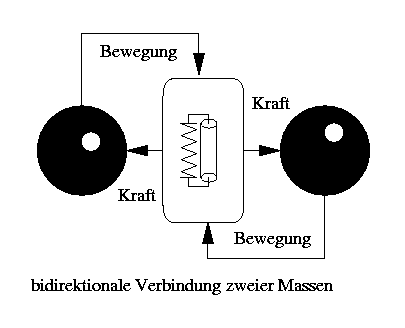
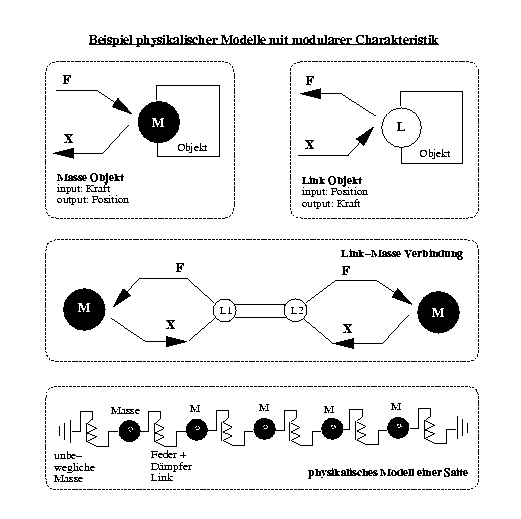
functionality of the bi-directional communication between 2 masses
(sorry for the german expression) Kraft means force and Bewegung means
movement.
A special form represents the conditional link which can functions in
specific circumstances. It allows to include friction as a specific way
to transmit energy. A bow f.e. has moments where the string and the hair
create solid connection followed by a short time segment where the string
slips and the bow is separated from the string. This effect could be created
with a conditional link which allows the delivery of energy from one mass
to the other only until a threshold of movement or distance is reached.
Since the space of the masses and its links is one dimensional, the
representation of the position of the mass is not equivalent to the 3 dimensional
position the mass has in the simulation. This means that the model does
not take in advance geometric aspects like angle.
What especially is interesting in the resulting sound out of such a
physical model is the fact its natural behavior and as well its possibilities
of modification. Usually a sound if it is created in an artificial manor
its modification shows some artifacts of the synthesis method.
These elements will in all case of decomposition be a physical model
and behave like one. The modification of the patch and the destruction
of links and masses will not destroy the functionality of the system. Since
it can be explained by the fundamental type of the structure of this model.
Since all the elements got a very general character, the decomposition
does not destroy aspects of the functionalism as a physical object. A more
specific model with separate function modules works only in special circumstances
and parameter constellations similar to physical reality.
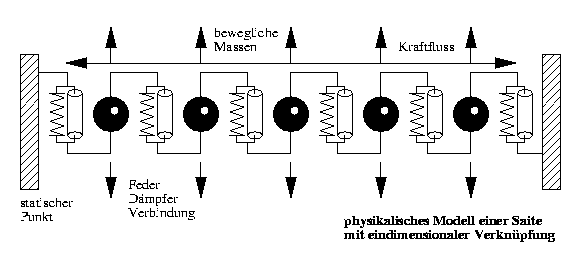
translation of the used german expressions:
bewegliche Massen = moving masses,
statischer Punkt = static Point
Kraftluss = flow of force, it represents the flow of the Mass
displacement in a string
Feder Dämpfer Verbindung = spring damper connection
One limitation of the models should be mentioned. Since an audio signal
consists of a pressure wave the simulation may consist of a 1 dimensional
space where the masses are connected in 2 dimensions but moving in one
direction. Its a kind of tricky idea but the amount of calculation reduction
possible with this limitation is immense. The example shows a model of
a 2 dimensional connection of the masses moving in 1 dimension.
Overview of the seminars topics
1. Genesis for Sound or image synthesis
2. Composition/Video Analysis
3. algorithmic composition
3.1 Common Music
3.2 Csound
3.3 Mix
Genesis
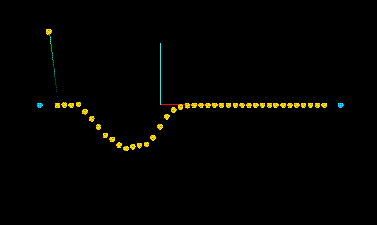
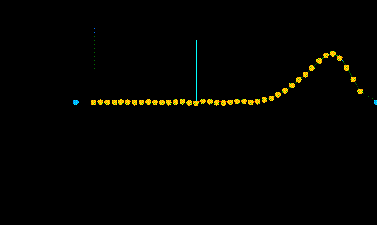
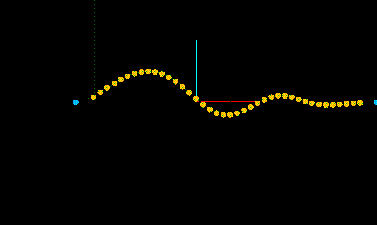
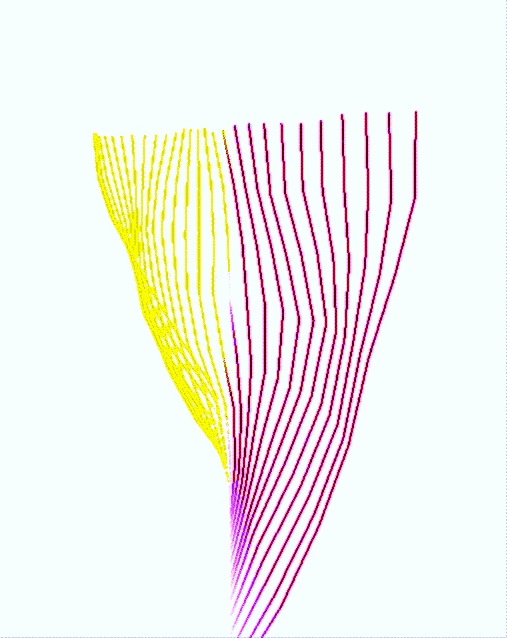
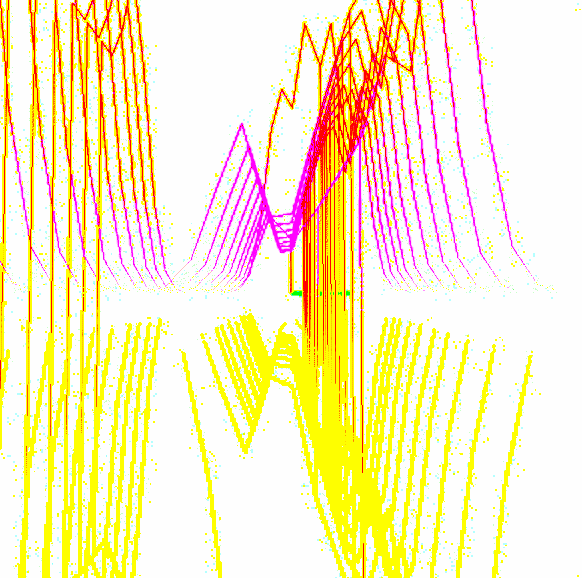
GUI Layout and examples of animations of
a string
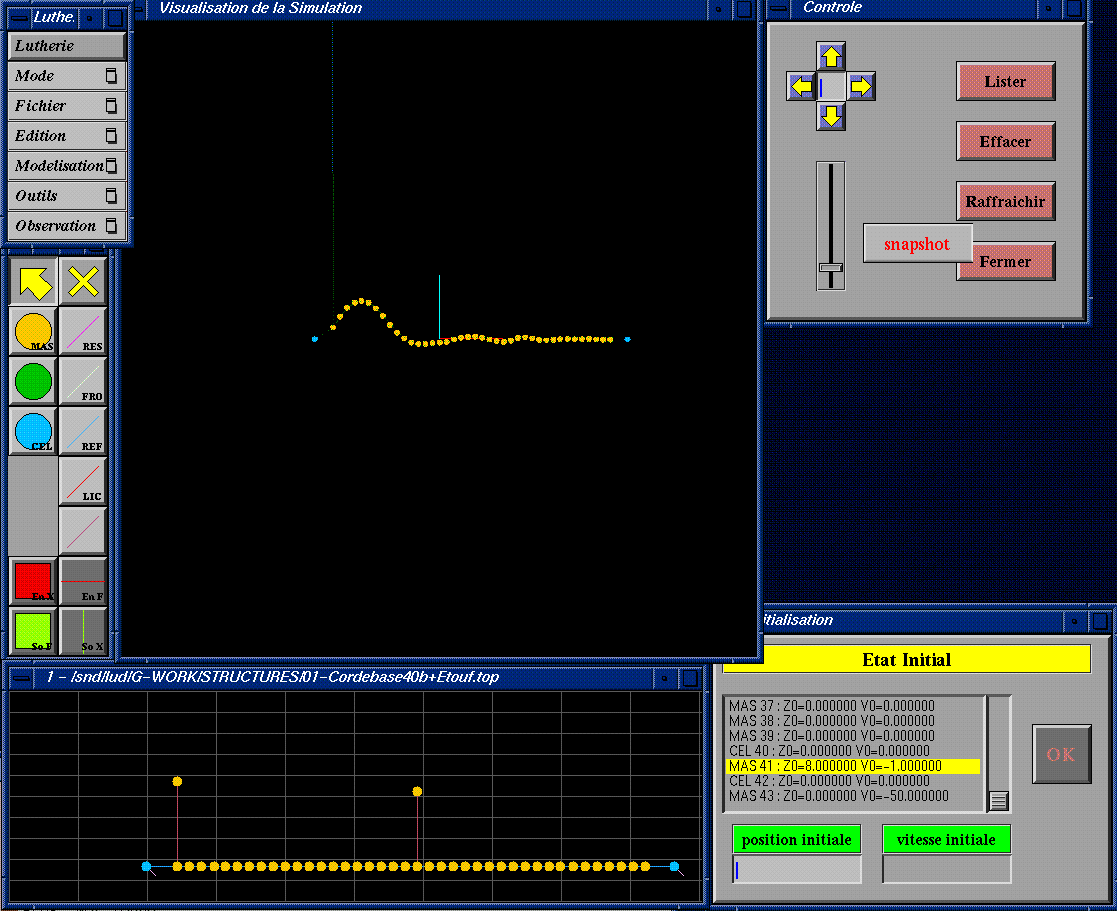
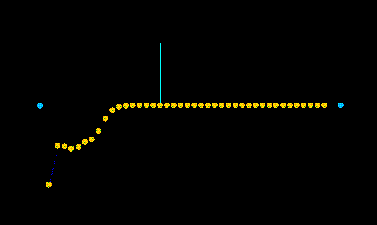
several states of a plucked string
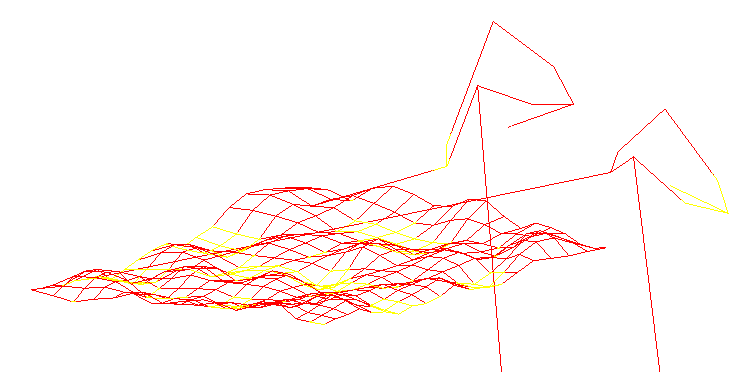
Genesis animations of complex patches
membrane with complex energy injectors
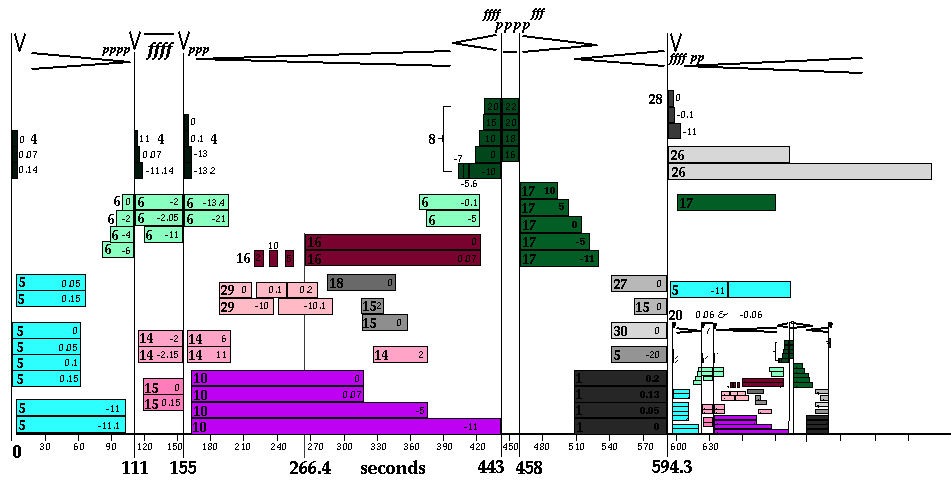
Score
Le tombeau de Maurice
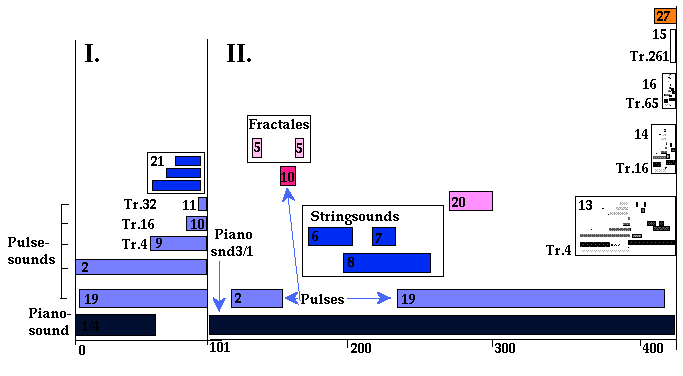
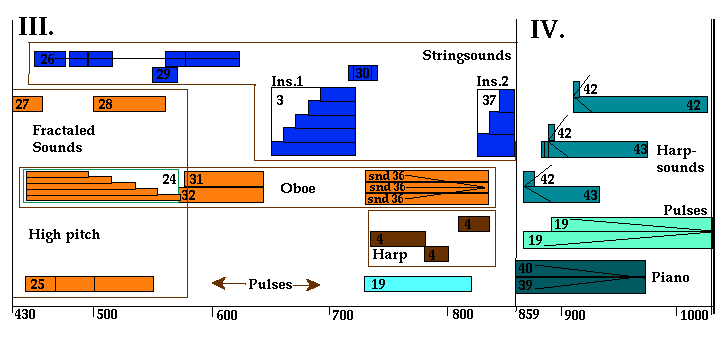
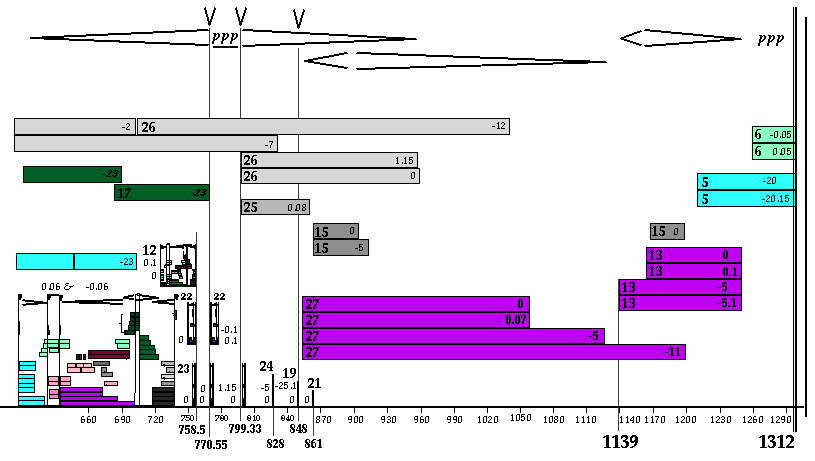
Score
La cloche sans vallees
What to know for algorithmic composition with Csound and Common Music
How to get started?
2. Csound
for Csound you should call the soundfile you want to read "soundin" followed by a dot and a number. For example: soundin.23 . You can change the number behind the dot. You call the specific soundfile only by calling its number.
Now we have a look at the Common Music algorithm (all reserved words are bold):
(algorithm foo i2 (length 20 dur .1 rhythm .1
amp
1
atk 0 rel 0
file-nr 23 skip 0 ampl 1 ampr 1 rvbsend .1
file-nr 23)
(setf pitch (between 4 20)))
algorithm is the function name
foo is the name you decide to give the algorithm
i2 is the name of the csound instrument you chose
length tell how many notes this algorithm should create
dur = duration of the note
rhythm = the position of the note. For example writing .1 would create
a repetition of 10 note per second
amp = amplitude between 0 - 1
atk = attack time in seconds
rel = rel time
file-nr = write the number of the file you want to use
skip = where to begin reading the soundfile 0 = beginning, .1 = after
.1 seconds
ampl = amplitude of left channel, just in case the dynamic balance
between left and right is not o.k.
ampr = amplitude of right channel
rvbsend = how much reverb should this event get
an the algorithm for reverb:
(algorithm foo99 i99 (length 1 rhythm 0 dur (+ (* 70 .1) 3.5) rvbtime 3.5))
take one event, leave rhythm 0 and for dur take the sum of all the events plus reverb time (+ all-events rvbtime). rvbtime tells the reverberation length, or better, the size of the room it simulates.
and about Lisp
a more sophisticate example of an algorithm
between = pics a random value between the 2 numbers. Will be fractional
if they a fractions.
(item (items a b c d)) = will read the elements in cycle as much as
you want: a b c d a b c d
vars = variable declaration. When you need a variable declare it here
and then you can use it.
(rhythm-var .1) = the variable rhythm-var will start with the value
.1
incf = increments the value of the variable rhythm-var by 0.01 so that
its getting larger larger each time 0.11, 0.12, 0.13, 0.14 ....
Creative Steps on the way to the video
To give an overview above all the steps of the creation
of the video in this workshop have a look at this picture
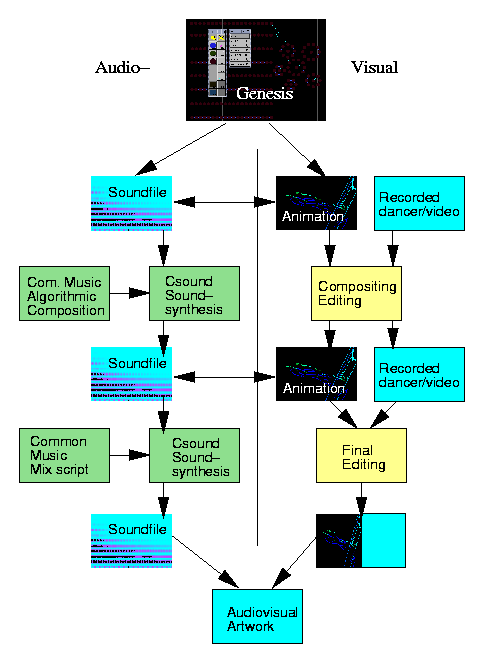 You see that there
are some horizontal arrows in the plot. They mention the steps where at
least the visual group has to interact with the audio group. But of course
it is encouraged to work much closer together or at least to observe each
others work several time throughout the creative process.
You see that there
are some horizontal arrows in the plot. They mention the steps where at
least the visual group has to interact with the audio group. But of course
it is encouraged to work much closer together or at least to observe each
others work several time throughout the creative process.